Sex Offenders in the U.S.: Classifications, Registry Rules and Current Statistics
- What Is a Sex Offender?
- What Crimes Make Someone a Sex Offender?
- Sex Offender Tiers and Classification Levels
- How Many Sex Offenders Are in the United States?
- How the Number Has Changed Over Time
- States With the Most Registered Sex Offenders
- States With the Highest Rate Per Capita
- Who Is on the Registry? Offender Demographics
- How Long Do Sex Offenders Have to Register?
- Recidivism: Do Sex Offenders Reoffend?
- How to Search the Sex Offender Registry
- Frequently Asked Questions
Sex offenders in the United States are individuals who have been convicted of qualifying sexual offenses. Such people are typically required by law to register with a sex offender registry. Each state has laws regarding the sex offenses that require registration with the registry, how offenders are classified, and how long they are listed on the registry. However, the general legal framework is the same nationwide.
In this article, you will learn what it means for someone to be a sex offender, the average number of sex offenders in the United States currently, and how to search the sex offender registry. You will also find out how registration requirements vary across the nation and how sex offender classification systems work.
What Is a Sex Offender?
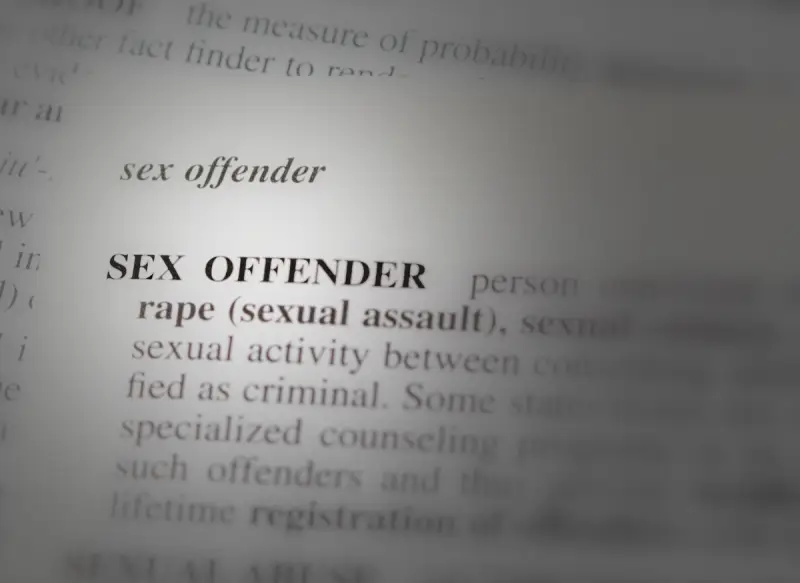
Anyone who has been convicted of a sexual offense that requires registration under federal law is referred to as a sex offender. In some instances, a sex offender can also be someone who has been adjudicated by a court for sexual misconduct. Being a sexual offender does not mean a person is diagnosed with a psychological or medical condition. Rather, it is an individual’s legal classification requiring them to register because of qualifying offenses.
That someone is required to register as a sex offender is not an indication of their likelihood to commit another sex offense. It basically means the person satisfies the legal criteria set by the state where they were convicted of a sex offense or where they reside.
The conditions for enrolling as a sex offender in the United States are governed by both federal rules and state laws established through the Sex Offender Registration and Notification Act(SORNA). Established by the Adam Walsh Child Protection and Safety Act of 2006, SORNA sets the minimum nationwide guidelines for registration, public notification, and information sharing. However, each state has the liberty to determine how to implement those standards.
What Crimes Make Someone a Sex Offender?
An individual may be asked to register as a sex offender after conviction or adjudication for certain offenses as determined by federal or state law. Whether someone is required to register depends on the facts of the case and the state where the conviction occurred.
Here are common offenses (non-exhaustive) that can make someone a sex offender in the United States, depending on the jurisdiction/state:
- Sexual assault
- Unlawful sexual contact or battery
- Rape or attempted rape
- Incest
- Lewd conduct or indecent exposure in public, depending on the circumstances
- Child sexual abuse or molestation
- Certain sexting offenses involving minors, even when both parties are under 18
- Possession, production, or distribution of child sexual abuse materials (pornography)
- Kidnapping or false imprisonment of a minor with the intention of sexual servitude
- Sex trafficking involving minors or adults
Sex Offender Tiers and Classification Levels
Not all states follow SORNA in how they classify sex offenders within their jurisdiction. Some have established their own classification systems. However, most states categorize sex offender registrants using a 3-tier system under the Adam Walsh Child Protection and Safety Act of 2006. Each of these tiers portrays the nature or severity of the qualifying offense and determines how long a registrant must remain on the sex offender registry.
One may ask, what are levels of state offenders? Some states use levels and tiers interchangeably, but they don’t always mean the same thing. A level may describe someone’s assessed risk of reoffending or the degree of public notification required under state law. On the other hand, a tier means the legal registration category of a sex offender under SORNA.

Here are the three main sex offender tiers established by SORNA based on the specific conviction:
Tier 1 (Lowest Risk)
Individuals convicted of qualifying offenses that are considered the least serious are generally classified under Tier 1. An offender’s registration under this class typically lasts 10 to 15 years, but some states allow eligible people to petition for removal. Such individuals must have maintained a clean record while meeting several other legal requirements.
Tier 2 (Moderate Risk)
Tier 2 includes offenders convicted of more severe crimes (but moderate compared to Tier 3), especially those involving minors or repeat sexual offenses. Such offenders are often subject to stricter reporting requirements than those in Tier 1 and must remain registered for about 25 years in most jurisdictions.
Tier 3 (Highest Risk/Sexually Violent Predator)
People convicted of the most severe registrable offenses and those designated as sexually violent predators (SVPs) are categorized under Tier 3. Note that the criteria for designating an individual as an SVP differ by state. Offenders classified under Tier 3 are typically required to register in the sex offender registry for life and may be subjected to broad community notification.
Tier | Risk Level | Typical Registration Length | Example Offenses |
Tier 1 | Lowest | 10 to 15 years | Certain nonviolent offenses, less severe registrable sexual offenses, and some indecent exposure convictions |
Tier 2 | Moderate | About 25 years | Repeat Tier 1 offenses, child exploitation, and sexual offenses involving minors |
Tier 3 | Highest | Lifetime registration | Child molestation, rape, sexually violent offenses, aggravated sexual assault, and repeat severe sexual offenses |
How Many Sex Offenders Are in the United States?
About 795,000 to 810,000 individuals are listed in the United States sex offender registries. The number fluctuates as individuals enter and leave their mandatory period. No single, centralized real-time database provides an exact, real-time national total. If you are wondering how many sex offenders in United States registries there are currently, an aggregation of all 50 state registries puts the figure at approximately 795,050 registered offenders.
Registry totals are constantly changing as states update their databases in real time and estimates vary by source. For instance, reports by the U.S. Department of Justice’s Bureau of Justice Statistics (BJS) and the National Center for Missing and Exploited Children (NCMEC) usually differ. This is because each organization relies on different data sources, reporting dates, and methodologies, reflecting the decentralized structure of the sex offender registration system.
How the Number Has Changed Over Time
While the total number of registered sex offenders in the United States continues to fluctuate, it has steadily declined over the past decade. Here is how this number has changed over time.
Year | Registered Sex Offenders (Estimates) |
2016 | 860,000 |
2020 | 821,000 |
2024 | 795,000 |
The sex offender registry totals change for several reasons. These largely include deaths, new registrations, completion of registration requirements, and court orders removing eligible individuals. The national total is best described as a constantly changing estimate since each state maintains its registry and updates it independently.
States With the Most Registered Sex Offenders
The largest state sex offender registries are managed by five states, namely Texas, California, Florida, Michigan, and New York. These states account for about 45% of the total registered offenders in the United States.
State | Registered Offenders ( 2024 Estimates) |
Texas | 107,000 |
California | 106,000 |
Michigan | 44,000 |
New York | 42,000 |
Florida | 31,000 |
States With the Highest Rate Per Capita
Top 5 States by Registrants per 100,000 Residents in 2024 | Rate Per 100,000 Residents (Approximate) |
Oregon | 1,340 |
Arkansas | 1,210 |
Alaska | 1.190 |
Oklahoma | 1,050 |
South Dakota | 1,020 |
The number of registered sex offenders per 100,000 residents (per-capita rate) usually tells a different narrative than comparing total registrants. For example, California and Texas have the largest sex offender registries due to their population size, but smaller states like Oregon have a considerably larger share of registrants relative to their population. Factors such as offense classifications, registration laws, registration duration, and removal policies can influence a state’s per-capita rate, causing these different narratives.
Who Is on the Registry? Offender Demographics
The registry includes individuals of different ages convicted of different offenses and subject to varying registration requirements. Generally, demographics vary by state and the amount of information made public can all differ depending on state law.
Most people on the registry are adults, many of them between their 30s and 60s. The overwhelming majority of these registrants are male. Data from state and federal correctional facilities consistently reveal that over 95% of individuals convicted of sexual offenses are men. Many of the registrants are those convicted of offenses involving sexual abuse and sexual assault, particularly crimes against minors or children. Others include registrable offenses such as possession of child sexual abuse material and child exploitation.
How Long Do Sex Offenders Have to Register?
Many registration periods last decades or even a lifetime. The length of time an offender must remain on a registry depends largely on the offender’s tier, the severity of the offense, and state laws. Two individuals convicted of similar offenses in different states may face different registration periods since registration laws vary across jurisdictions.
While there is no single nationwide registration period for sex offenders in the United States, here are the general registration periods across the nation:
- 10 to 15 Years: Applies to many Tier 1 sexual offenders convicted of less severe registrable offenses
- 25 Years: This applies to many Tier 2 offenders, especially those convicted of certain crimes involving minors or more severe offenses
- Lifetime: Applies primarily to most Tier 3 offenders and those convicted of the most severe sexual offenses, including sexually violent predators.
Recidivism: Do Sex Offenders Reoffend?
Some individuals convicted of sexual offenses do reoffend but different types of sex offenders have different rates of recidivism. The rates of reoffense (recidivism) generally vary depending on the length of follow-up and the population under review.
According to data from peer-reviewed research by the Department of Justice (DOJ), sexual recidivism rates typically range from 5% after three years to 24% after a 15-year follow-up period.
Follow-Up Period | Sexual Recidivism Rate (Approximate) |
3 years | 5% |
5 years | 14% |
10 years | 20% |
15 years | 20 - 24% |
Findings by the DOJ reveal that observed sexual recidivism rates are underestimates of actual reoffending. However, the rates of recidivism for sex crimes are lower than those of general crime categories. According to research, sex offenders are more likely to recidivate with a nonsexual offense than with a sexual offense.
How to Search the Sex Offender Registry
You can find out whether an individual is listed on a sex offender registry for free through the National Sex Offender Public Website (NSOPW) managed by the U.S. DOJ. This searchable federal database has publicly available data from participating state and tribal registries. Additionally, you can look up offenders through individual state sex offender registries and other alternatives to government sources.
Here are a few ways to search the sex offender registry:
- Open NSPOW and choose to search by name or location. Use name, address, ZIP code, or city as the search criterion, depending on the search type.
- Visit the official state registry, especially if you need the most current data or additional information.
- Use Infortracer’s search system. Select the state where the individual whose record is being sought lives or was convicted and provide their name and/or city before conducting the search.
What Information Can You Find in a Registry Search?
The level of information available in a sex offender registry is not the same in every state. For most Level 3 offenders, information available may include a full residential address and additional identifying details. On the other hand, most states limit the amount of details available in public searches for Level 1 or 2 offenders, mostly showing only ZIP codes.
Here are details you may find in most registry searches:
- Offender’s full name and any known aliases
- Age or date of birth
- Booking image or photograph
- Compliance status
- Registration tier or risk level
- Physical description of the offender (eye color, height, weight, or any other identifying features)
- Qualifying offenses
Frequently Asked Questions
Is "Sex Offender" the Same As "Sexual Predator"?
No, they are not the same legal classification. Not every registered sex offender is classified as a sexual predator. A sex offender is someone who is legally required to register after a qualifying conviction. On the other hand, a sexual predator is primarily a designation used in some states for individuals who meet certain legal criteria, typically involving serious offenses or a higher risk assessment.
Can Someone Be Removed from the Sex Offender Registry?
Yes. An offender can be removed from the sex offender registry, but eligibility depends on state law. While not everyone is eligible for removal, most states allow certain Tier 1 offenders to file for removal after completing a required registration and remaining offense-free. By contrast, Tier 3 offenders required to register for life have fewer chances for removal from the registry.
Do All States Share the Same Registry?
No, all states don’t share the same registry. Each state has a separate sex offender registry and no one agency maintains a single national registry. States generally share information about sex offenders through the DOJ’s National Sex Offender Public Website (NSOPW).
Is Registry Information Public?
Yes, sex offender registry information is typically public. However, the level of details available to the public vary by state and some records in the registry have more details than others. Generally, higher-risk offenders often have more detailed public records than lower-level offenders.
How often is Registry Information Updated?
Information in the sex offender registry is constantly updated. Registered offenders are typically required to report any changes about them within deadlines set by the state. These changes are reflected in the state registry as soon as they are processed and are subsequently synchronized with NSOPW. The United States has no nationwide update schedule since each state manages its own regis
- What Is a Sex Offender?
- What Crimes Make Someone a Sex Offender?
- Sex Offender Tiers and Classification Levels
- How Many Sex Offenders Are in the United States?
- How the Number Has Changed Over Time
- States With the Most Registered Sex Offenders
- States With the Highest Rate Per Capita
- Who Is on the Registry? Offender Demographics
- How Long Do Sex Offenders Have to Register?
- Recidivism: Do Sex Offenders Reoffend?
- How to Search the Sex Offender Registry
- Frequently Asked Questions

Ben is a Digital Overlord and Chief Security Officer at InfoTracer.com who takes a wide view from whole system. He authors guides on entire security posture, both physical and cyber. Enjoys sharing best practices and does it the right way!

Related Articles

How to Find Someone You Lost Touch With
In our busy lives, changing jobs, getting married, getting divorced, and having kids, years can go by, an... Read More

How Can I Find Out If Someone Is Divorced
Per the Freedom of Information Act, marriage and divorce records are both considered public records and a... Read More

How to Lookup Someone’s Dating Profile and Why You Should Do It
Online dating has become the new normal for people who want to be in a relationship. While the old schoo... Read More

Divorcing Someone Who Has Disappeared
Disappearing spouses are the subject of many country songs (Chris Cagle sings, “..there’s gone for go... Read More

Tips on How to Have a Smooth Divorce
There are recipes for the perfect life, the perfect job, and the perfect kid, but they rarely turn out qu... Read More
